Beyond Old Binaries: Listening to New Voices for Change
How shifting public opinion is reshaping the conversation on Ireland's future

Something is changing in how people think about Ireland’s future - and it’s moving beyond old binaries.
That shift is starting to show up in public debate, including a recent exchange in The Irish News between Professor Pete Shirlow and political analyst Mike Burke.
For a long time, the constitutional debate has been framed in a very one-sided way.
Wanting a United Ireland is often labelled “disruptive” or “divisive”, while remaining in the Union is treated as the default – something neutral, almost beyond question.
The unspoken message? If you support change, perhaps it’s best not to rock the boat.
But data from the latest 2025 Northern Ireland Life and Times survey tells a very different story.
The idea that the conversation around unity has stalled simply doesn’t stand up anymore. In many ways, it rests on outdated assumptions – and, as Burke points out, on polling models that haven’t fully captured what’s been changing beneath the surface.
When you look at the current data, a few things stand out:
The middle ground is moving
People who neither identify as unionist or nationalist are no longer sitting on the fence. In 2017, they favoured the Union over Unity by around 30 points. Today, that gap has dropped to just over 8%. That’s a significant shift in a relatively short space of time.It’s happening across society
This isn’t simply a traditional ‘green versus orange’ trend. Out of 24 demographic groups, 23 are moving in the same direction – towards unity. Women, younger people (particularly those aged 25–34), and more secular voters are helping to drive that change.Old assumptions are fading
The belief that a steady proportion (20%) of Catholics would always support the Union has been steadily weakening, now sitting at around 13.5% in 2025.
Taken together, these trends suggest something important: the conversation has moved on. Support for change is no longer a fringe position – it is becoming part of the mainstream. And the so-called ‘middle ground’ isn’t passive; it is actively thinking about what comes next.
That’s why it is becoming harder for the Irish Government to treat this as a question for another day.
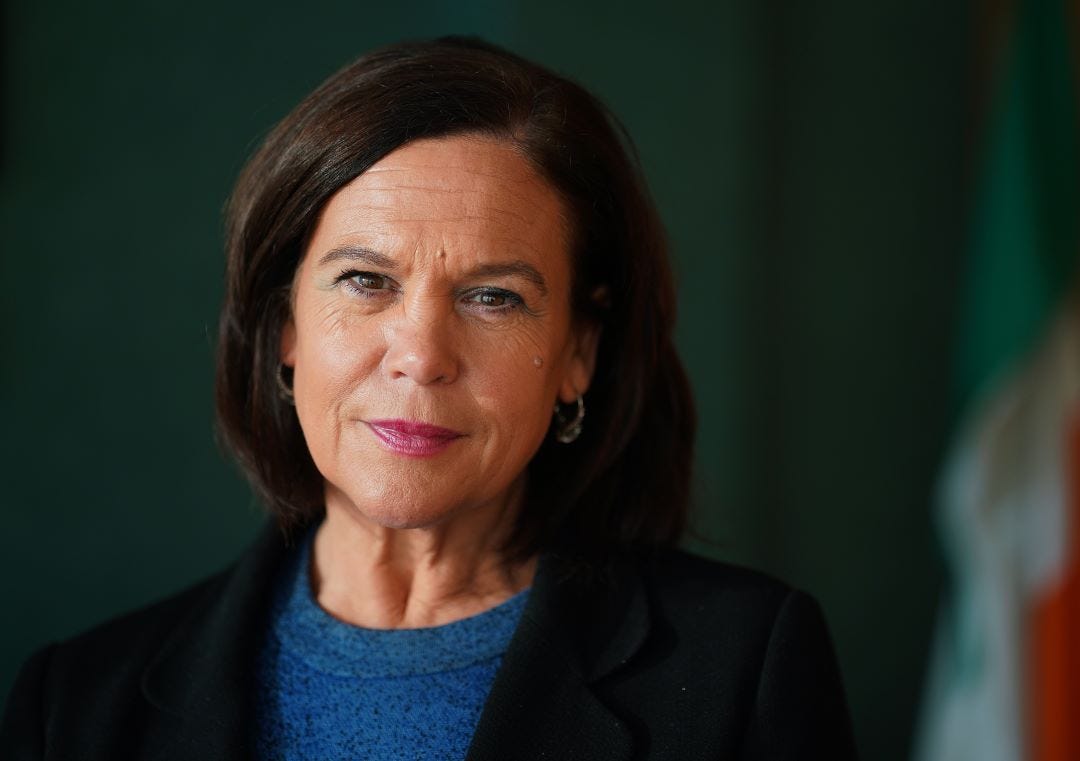
This week, Sinn Féin President Mary Lou McDonald introduced legislation in the Dáil aimed at forcing real preparation for constitutional change – including a Green Paper, a Citizens’ Assembly, and proper oversight.
Put simply, it is about bringing structure and seriousness to a conversation that is already well underway among the public.
For those of us who support a United Ireland, this moment also brings responsibility to widen the conversation, move beyond old labels, and think seriously about what a modern, shared, rights-based Ireland could look like – one where everyone, from every background and tradition, feels secure and at home.
The ground is shifting. The old assumptions no longer quite hold.
The real question now is simple: what kind of future do we want to build together?